Click to listen to a recording of this essay
“I learned that courage was not the absence of fear, but the triumph over it.”
Nelson Mandela
“Courage is the fear you ignore.”
Kristin Hannah, The Four Winds
“It is easy to be brave from a safe distance.”
Aesop, The Wolf and the Kid
Life only demands from you the strength you possess.”
Dag Hammarskjold, Markings, (1964)
“It is a simple matter of what you will do when the chips are down, my friend. When the fat lady is singing. When the walls are falling in, and the sky is dark, and the ground is rumbling. In that moment our actions will define us. And it makes no difference whether you are being watched by Allah, Jesus, Buddah, or whether you are not. On cold days a man can see his breath, on a hot day he can’t. On both occasions, the man breathes.”
Zadie Smith, White Teeth, pg. 87
It’s been said that in terms of life’s hardships, God only gives you what you can handle. I’m sure there are many poor souls who would dispute that notion. They’d tell you with a sad heart that they have endured an overwhelming amount of misfortune and tragedy in their lives, way more than their fair share — sometimes to the point of questioning their ability to cope and to carry on. And, they sometimes question whether their God has disproportionately given them way too much with which to deal.
I’ve often thought of and compared a person’s ability to handle extreme hardship to their ability to summon and act with courage. For, after all, I think that both hard times and bravery can often be part of the same story. However, the way that someone chooses to approach their difficulties is often not so much a choice as it is something that is thrust upon them. If a young man makes a decision to enlist in the armed forces during a time of conflict, he knows that he may find himself in a war zone; if he does that willingly, then he has had the opportunity to consider the danger involved and then make a conscious and courageous choice. On the other hand, if someone is afflicted with a serious and devastating disease, then their choices are limited: they can decide to fight, or to simply give up.
I think that whether the act of courage comes from a deliberate and calculated decision to face a dangerous situation, or one that results from the randomness of a debilitating sickness or accident, courage is still a necessary response — it is virtually demanded. In addition, some situations arise where a person must make an immediate decision to face up to an obvious and threatening situation. There is often little time to fully consider the resulting consequences of actions that must be taken. So many times when we see an individual bravely and capably respond in such a situation, we automatically assume that they are very courageous, almost fearless. However, the real truth is probably that they were in fact quite fearful, but chose in the instant to proceed as if they were not. As Mark Twain wrote:
“Courage is resistance to fear, mastery of fear — not absence of fear. Except a creature be part coward, it is not a compliment to say it is brave.”
Mark Twain, “Pudd’nhead Wilson’s Calendar,” 12.
Before someone chooses to take action in a dangerous or uncertain situation, it has been theorized that they should not deny the fear they will naturally feel. As a matter of fact, the relationship of fear and confidence goes a long way in determining how a person ultimately responds to danger. Professor Daniel Putman expresses it this way:
“The ideal in courage is not just a rigid control of fear, nor is it a denial of the emotion. The ideal is to judge a situation, accept the emotion as part of human nature and, we hope, use well-developed habits to confront the fear and allow reason to guide our behavior toward a worthwhile goal.”
D. Putman, “The Emotion of Courage”. Journal of Social Philosophy. 32 (4)
While Professor Putman describes how this should play out if considered intellectually, many of us don’t think that we would have the requisite amount of bravery to deal with overly threatening circumstances or challenges. I’ll go back to the example I gave earlier of a young man enlisting in the armed forces, knowing that he would be putting himself in harm’s way. And, then accepting the distinct possibility that he might be seriously injured, or even lose his life.
Back in late 1969, I was awaiting word of my army physical classification. It turned out to be 1Y, which was not quite 4F, but essentially meant that I’d only still be required to serve in time of war or national emergency. To me, though, Vietnam definitely seemed to fit the definition of both a war and a national emergency, so I always wondered how “safe” I was being classified as 1Y.
Though I didn’t end up being drafted, the possibility that I might be was always there in the back of my mind. At times, I’d find myself thinking deeply about it, and trying to picture what it might be like in a war zone in the midst of battle chaos. I have to admit that even the thought of it scared me silly. I seriously questioned whether I would have had the courage to be in that situation and to not totally freak out. I sometimes half-joked that I had several legitimate reasons for not being fit for the service:
• I had a problem with my back — there was a yellow streak down it;
• It was against my religion — I was a devout coward.
In actuality, I had a lot of admiration for those who served our country during the Vietnam years. Of course, I was strongly against the very premise of the United States entering the war. But, that was not the point. There were plenty of brave souls who were also against the war, and yet courageously accepted the situation and did what their country asked them to do. And, the fact that I was able to avoid serving always made me feel very guilty. I’ve pretty much apologized to every Vietnam vet I’ve ever met over the years; I’ve told them that I appreciated the fact that they were there on the battlefield instead of me. Most acknowledged my sincere regret, but a number of them even admitted if they could have let that cup pass from them, they would have.
Over the course of my business career, I always felt compelled to respectfully disagree with my bosses when I thought that as a department or unit, we were doing something that was questionable, not smart or just bad for business. I guess I naively thought that my actions demonstrated some sort of courage. But, l finally came to understand over time that it was no big deal on my part, just doing the job that I’d been hired to do. And, again as I grew older and perhaps a little bit wiser, I realized that I could look all around me and see many forms of bravery from everyday people just trying to navigate their way through life:
• single parents trying to raise a family on their own;
• sexual abuse victims trying to take their lives back;
• veterans with PTSD trying to recover some semblance of a normal life;
• black families that had been the victims of racial violence fighting for justice;
• severely sick patients fighting to overcome their health problems;
• older people on fixed incomes having to choose either food or meds
During this last, tragic year, so many of our fellow citizens have had to deal with the loss of loved ones to the pandemic. And, so many families already stretched to the limit have had to wonder how they would put food on the table during a devastating recession. Confronting these extreme challenges requires the utmost bravery. And, those who face this type of problem, or even worse, have to dig deep and somehow find the courage to move forward.
Euripides, the first millennium BC tragedian, had this to say about the hand that some folks are dealt in life: “This is courage in a man/ to bear unflinchingly what heaven sends.” Not too many people have ever been sent a heavier cross to carry than my good friend, David Sharp. We’ve all heard of “heroes”, those who show courage in the toughest of life’s situations; they exhibit exceptional bravery that makes them seem almost fearless. But, I think that certain people have the capacity to look fear in the face and to still proceed nobly. Dave was such a person, and he was not only my personal hero but the hero of so many people. He was, by far, the best example of personal courage that I have ever seen in my life. Essentially, and with no exaggeration, he was courage personified.
Up until his death last year, Dave and I had been friends for 50 years. Our wives were childhood buddies who spent time in the playpen together, Back when we were young couples, with kids, we would get together several times a year. I remember many times leaving the Sharps’ house after a visit and saying to Cathy that I felt like a better man for spending time with Dave. It was such an easy and comfortable friendship, and I’m sure it was one that he had with many people. Why? Because there were no games ever played; Dave was just who he was, which was a fine and decent human being. I always had so much respect for the person he was, and my admiration only increased after his fateful accident.
The “accident” happened in January of 1994. The Sharps had visited us during the Christmas season. As they were leaving, Dave, who was a lineman for PSE&G, jokingly mentioned that he’d be putting in some heavy overtime in the coming weeks to help pay for Christmas gifts. A few weeks later, Cathy’s father called and said that he had seen an article in the Newark Star Ledger that mentioned a David Sharp, aged 47, who had been injured on the job. It noted that he had been electrocuted and taken to St. Barnabas Hospital. I called there the next day to inquire about Dave’s condition. When the nurse asked me if I was a relative, I knew that is was very bad.
It seems that Dave had indeed been putting in some overtime and had been on a call with another lineman who was not his regular partner. He was up on a ladder making a repair, evidently with the understanding that power to the line had been shut off. It had not. 26,000 volts of electricity surged through Dave’s body, seeking an outlet. He was thrown off the ladder, with the very least of his problems being a ruptured spleen. He was rushed to the hospital, where his spleen was removed. Doctors were so certain he wouldn’t survive that they just closed up the surgical site, not worrying about any muscle repair.
It turns out that the surge of volts that tried to force its way out of Dave’s body fortunately did not go to his heart or to his brain. Instead, though, it pushed out through his hands. The result was necrosis, and then gangrene. Since Dave was in an induced coma, and would be for weeks, a decision had to be made by his family very quickly: amputate both hands above the wrist or he would die. Obviously, the decision was already made for Carol, her daughter and her son.
The thing about Dave, though, was that there were two things in his life that he loved very much: his family, first and foremost, and hunting and fishing. When I eventually heard about what would now be Dave’s permanent condition, I wondered how he would be able to cope without the hobbies that were so much about who he was. And, not only that, but how would he deal with no longer being able to do just the ordinary, everyday actions we perform with our two hands — and, that we so take for granted?
Needless to say, Dave had to undergo a series of surgeries, as well as engage in a major rehabilitation program just in order to continue on with his life. About a year and a half later, Cathy and I were going to see Carol and Dave for the first time since the accident. I had already known Dave over 20 years at that point, but I was still nervous as hell about seeing him. I didn’t know what I’d say when I saw him. I worried about doing the right thing, reacting the right way, not wanting to embarrass him, or me. For those reasons, I was secretly dreading the visit.
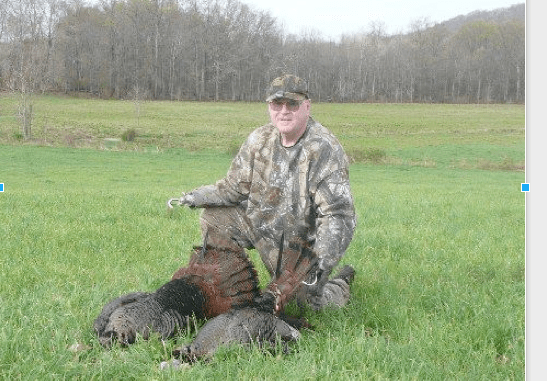
I needn’t have worried. This was Dave after all. When we arrived at their front door, Dave came out to greet us. He had been fitted with split hook prosthetics (which I later learned were cable controlled and body powered.) We obviously didn’t do the normal handshake, and eventually I found out that a forearm bump was appropriate. So, we gave each other a big hug. And, five minutes later we were sitting around the kitchen table, drinking a beer and picking up on conversations we had been having 18 months before. Almost as if nothing had changed. But then again, as I said — that was Dave. He had the ability to make you feel better even while you were feeling bad about his situation, even though he was the one who was suffering.
And, over the years pretty much everyone who had come into contact with David, whether they had known him a long time or had just met him, was amazed at how — at least on the surface —he remained the same, calm, strong man after the accident that he had always been. I never heard the guy complain or once cry “woe is me,” and he certainly had ample reason. I don’t know how he was able to assure himself in the quiet of his mind, but outwardly he seemed to be no different than he was when I first met him. Think of it: this was a man who had to put on his “hands” every morning, and he needed help doing it.
About 10 years ago, we took the first of four bus trips with the Sharps. When we initially told our kids that we’d be going on a” senior” bus trip, we truly expected there would be some good-natured ribbing. But, once they knew that we’d be traveling with Dave and Carol, they thought that it would be great. On one of those trips, one afternoon Dave and I were sitting off to the side in a bar in Mackinac City, having a beer; we were discussing sports — and life. Dave shared his feelings from so many years before about “waking up” in the hospital from the coma after a number of surgeries. “Frank,” he said, “I cried”. I asked him if, at that moment, he felt he needed to be there not only for his family, but for his son Brian in particular (Brian had been diagnosed with non-Hodgkin’s Lymphoma). And, he assured me: “Absolutely’”. So, when most of us would have been so fearful and afraid that we’d have curled up in a fetal position and died, Dave looked fear squarely in the face and decided that he would live, he would somehow overcome and most of all he would be there for his family.
I have spoken about Dave and told his story to so many people over the years. Literally, everyone who knows me knows about Dave Sharp. My three sons have heard me refer to him countless times and all of them had great respect for the man. My son Josh, in particular, has always felt a strong connection to Dave’s story, and was so in awe of what he’d been able to accomplish in his life after the accident. Josh would often speak about Dave to his own friends. One roommate, Todd, had undergone major spine surgery but would complain to Josh on a regular basis about the discomfort he was experiencing. Finally my son had heard enough complaining and challenged his roommate to suck it up. To which Todd replied: “I know, Dave Sharp.”
In addition to the many physical problems resulting from the accident, later in life Dave experienced additional health setbacks. Evidently, “heaven” was not finished sending challenges to this man of courage who yet seemed to bear them “unflinchingly”. Six years ago, he found out that he had ocular melanoma in one of his eyes. After surgery was done to remove a tumor, he had no vision left in that eye. Additional tests revealed that he had a cancerous tumor on one of his kidneys, which they removed. But, none of this is what finally caused his death. In December of 2019, Dave was sitting up in his hunting blind, waiting for deer. Eventually, when he came down the ladder, he missed a rung or two and fell heavily on his side. He was a bit sore, but thought nothing of it. Dave had a very high threshold of pain, but after several weeks the soreness lingered and got worse; he finally saw a doctor who discovered that Dave had not only broken a few ribs, but had suffered a punctured lung as well. Pneumonia turned into sepsis, which then took his life relatively quickly.
Perhaps these words from the Roman philosopher Seneca capture what Dave came to represent for so many of us who knew him well: “Sometimes even to live is an act of courage.” David is gone from this earth, but I don’t see how he could ever be forgotten. He has touched the lives of scores, if not hundreds, of people over the last quarter of a century, due to his kindness, his love of life — and yes, his exceptional bravery and courage. Sometimes, when I feel afraid about something going on in my own life or affecting my family, I murmur “Dave Sharp” under my breath. It is like a prayer, and it has become my personal mantra. It gives me comfort. It makes me feel better. It makes me feel safer. It urges me to be braver myself. And, I will continue to utter this good man’s name for the rest of my life…
Click below to listen to an audio recording of this essay
 Resonance