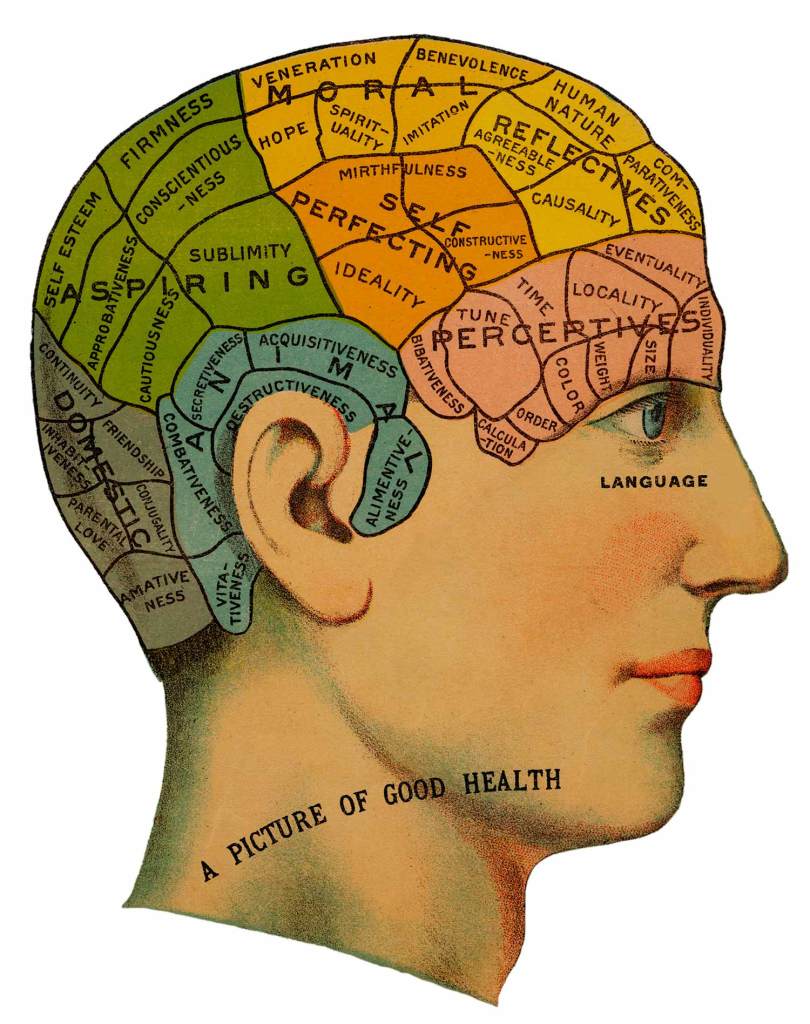
“I think, therefore I am.”
Descartes, Discourse on Method (1639)
“In itself a thought, a slumbering thought, is capable of years. And curdles a long life into one hour.
Byron, “The Dream,” (1816)
“What was once thought can never be unthought.”
Friedrich Durrenmatt, The Physicists (1962)
“All thought is a feat of association: having what’s in front of you bring up something in your mind that you almost didn’t know you knew.”
Robert Frost, “Writers at Work,” (1963)
“The thoughts that come often unsought, and, as it were, drop into the mind, are commonly the most valuable of any we have.”
John Locke, Letter to Samuel Bold, (1699)p { margin-bottom: 0.1in; line-height: 115%; background: transparent
“Where does a thought go, when it’s forgotten?”
Sigmund Freud
Many years ago, I came across a line in one of Emerson’s books of essays that has always stayed with me:
“Thoughts come into my head, I know not where they come from; thoughts leave my head, and I know not where they’ve gone.”
To be honest, this is not the actual quote, but only words to that effect. Despite some effort on my part over the years, I’ve never been able to locate the exact phrase. But, you get the gist of it. The point is that during our lives, we are bombarded with numerous and random ideas whose origination are largely unknown to us. And, sometimes almost before we realize it, they are gone. Many of these thoughts are simply innocuous, unexceptional, mundane — but, some of them can seem to be quite special. And, doggone it, what was that really cool idea I just had? If I could only remember it… I don’t think this experience is peculiar to me, but is probably something most of us encounter. However, since I don’t have proof of what is going on in your mind or the minds of others, I’ll instead share some of what I’ve experienced.
I’ve definitely had a number of random thoughts flicker thru my noggin over the years. Most of them have seemed insignificant, while others suggested something a bit deeper. Occasionally — when I reacted expeditiously enough — I’d recognize a thought, idea or phrase that I wanted to capture, and savor. So, I would quickly grab pencil and paper and jot it down, lest I lose any trace of it. Oddly enough, many of those intermittent ideas found a way of remaining in my orbit over time. And, they would come back periodically to pay me a visit. With each visitation, I found quite a few of these thoughts turning into concepts — and, eventually, long-held beliefs.
Perhaps you, dear reader, have experienced something similar in your life. Maybe you have had the same exact thoughts as me. Though, more than likely, you’ve had your own, special, unique, notions to consider. At any rate, here are three examples of what I’m talking about…
Random Thought #1: And Then, One Day, Everything’s Different…
Let’s be forthright here. If you’re a more or less typical human being, you’ve had your share of ups and downs. It’s a familiar scenario if you’ve been on the planet for a while. You know, things are going pretty well in your life —and then you hit an unexpected speed bump or two. Where you were sailing comfortably along on Monday, come Tuesday morning when you woke up, everything seemed quite different. Sometimes it’s a result of a financial matter, or it’s job-related. Perhaps it’s due to a relationship problem, or even a physical injury. Just something that comes along in your life to upset the apple cart as it were — and derail your equilibrium.
I’m thinking back to a time in my own life when I felt myself coming off the rails a bit. It was 1997. That year I turned 50 and my youngest son Luke left for Oberlin (and left us with an empty nest.) In addition, our lovable dog Mikey (17 years old) had to be put down. None of these happenings were overwhelming in and of themselves, but the convergence of all three at the same time seemed to upset my balance for a while. I found myself re-thinking and overthinking some of the simplest tasks. Sometimes I would project ahead and worry about situations that might not even happen and problems that would never arise. To put it simply: I had lost my natural motion.
William G, in Russell Hoban’s The Turtle Diary, experienced some similar symptoms:
“No place for the self to sit down and catch its breath. Just being hurried, hurried out of existence. When I feel like that even such a thing as posting a letter or going to the launderette wears me out. The mind moves ahead of every action making me tired in advance of whatever I do. Even a thing as simple as changing trains in the Underground becomes terribly heavy. I think ahead to the sign on the platform at the next station, think of getting out of the train, going through the corridor, up the escalator, waiting on the platform. I think of how many trains will come before mine, think of getting on when it comes, think of the signs that will appear, think of getting out, going up the steps, out into the streets. As the mind moves forward the self is pushed back, everything multiplies itself like mirrors receding laboriously to infinity, repeating endlessly even the earwax in the ears, the silence in the eyes.”
Russell Hoban, The Turtle Diary, pg. 85
After a modest amount of counseling, I rebounded to my normal self (if I was ever actually “normal” in the first place.) I’ve always joked that I considered myself a pretty well adjusted guy for someone with hangups! So, losing my natural motion was how I had always described that short period of time in my life. I would typically explain it by using a baseball example that I had made up. For instance, what if you took Tom Seaver in this hypothetical case. He was one of the greatest pitchers of all time. Day in and day out, year in and year out “Tom Terrific” kept striking out batters and piling up wins — accumulating 311 victories in all. And, in a 20-year career in the major leagues, he rarely suffered any injuries.
But, what if one day Tom accidentally stubbed his toe badly on the dugout steps, or took a hard line drive off of his shin. And, what if he began to favor the injury and started to throw the ball differently. Essentially, “aiming the ball” instead of throwing it naturally. And before long, Tom had either less success or an injury to his throwing arm. Though this was just an example I had created, it seemed likely that what I was suggesting had probably been experienced by a number of major league pitchers.
A few months ago, I stumbled across an account of what had actually happened to one of the greatest pitchers of the 1920s and 1930s. “Dizzy” Dean was pitching in the 1937 All Star Game in Washington, DC. He was facing Earl Averill of the Cleveland Indians. On the first pitch, he took a line drive off of his left big toe. When the season resumed, Dean probably should have taken time off for the injury to heal properly; however, the Cardinals were slipping out of the pennant race and needed him to pitch. His toe was so swollen he could hardly get his shoe on, but he tried to tough it out in his first start after the All Star Game:
“Like all giants among men, Dizzy Dean thought he was immortal, and even though the toe was too tender for him to pivot on his left foot, he gutted it out for the whole nine innings. The pain caused him to alter his natural delivery, and the result was that he put too much pressure on his arm. He developed a sore wing after that first game, and then, to compound the mischief, he went on throwing for another month.”
Paul Auster, Mr. Vertigo, pg. 259
So, William G, Dizzy Dean and I had all lost our natural motion. We had forgotten our normal way of doing things. In effect, we — and plenty of others, I’m sure —found ourselves for a period of time just “aiming the ball.”
Obviously, what caused Dean to lose his way was the result of a physical injury. And while that may happen as well to those of us who are not sports professionals, our unbalancing more than likely will come from something related to our jobs, our relationships, our finances or serious illness. So, while I have used a few baseball analogies to make my point, I don’t want you to lose sight of my point, which is: In the course of a life, each of us is going to have up moments and down moments. And, there can sometimes be an abrupt change between the two extremes. We may not always know what causes that change, but often we will find ourselves dealing with life much differently today than we did yesterday.
As I’ve suggested earlier, I think it all comes down to a loss (temporarily, mostly) of one’s equilibrium. Essentially: “an organism strives to regulate drives and to maintain homeostasis — that is, physiological equilibrium — balance.” Freud, of course, famously advanced the notion that there were three components underlying personality: the id, ego and superego. Basically, he proposed that these elements existed in “dynamic tension, requiring a constant attempt to achieve or retain equilibrium.” (“Equilibrium in Psychology,” Encyclopedia.com)
While the id unconsciously and instinctively is solely oriented towards self-gratification, the ego often must come to the rescue by seeking to reduce the tension with a “reality-based” response. The id-ego combination then tends to dominate a person’s behavior — sometimes leading to inappropriate behavior. This is where the superego comes into play, helping to develop a balance between the need to reduce self-gratification drives while recognizing the reality of inappropriate behavior in a societal or familial context. When the forces of the id, ego and superego are in balance, a person achieves equilibrium. (“Equilibrium in Psychology,” Encyclopedia.com)
I, of course, greatly respect the opinions of Dr. Freud. I would dare not even question this eminent man, certainly lacking any and all of the appropriate credentials, expertise and education myself. Yet somehow, when someone (you, me, anyone) is experiencing a loss of equilibrium, I’m fairly certain that the id, ego and superego are the last things on one’s mind. I know that all I was concerned about at the time was righting the ship, regaining my balance and restoring (and re-installing) my equilibrium.¯
And, while losing one’s balance can at times be a bit unnerving, most people survive it and, I believe, come back stronger. I think that is because as you fight to regain your footing, there is a trial and error learning process going on. You necessarily have to pay attention to what works in order to get back to “normal.” And, so you’re amassing quite a bit of knowledge that will help to keep you on track.
Let’s face it, at bottom, losing equilibrium is another way of saying that you’ve lost your confidence. Losing confidence in your actions, your decisions, but fundamentally losing confidence in yourself. As I’ve expressed earlier, I think that regaining your balance is a process. And, one that you need to work at. To me, it starts with a small “win,” followed by another and another. Small steps that are building blocks. And, if kept up, can lead to a cascading effect — and, success. According to Roy L. Smith, an American clergyman: “The man who cannot believe in himself cannot believe in anything else.” But, I think that Mark Twain conveyed this thought even more succinctly when he wrote: “A man cannot be comfortable without his own approval.”
Though some may look at it as a problem or a sickness, I personally view the occasional loss of equilibrium as an integral part of life. A variation on normal. Many years ago, I came up with this phrase: “To be human is to be erratic.” Yes, erratic, not always consistent, or stable, or steady, or dependable, or predictable. All a part, imho, of the dynamics of the human condition.
Ernest Hemingway once wrote: “We are all broken, that’s how the light gets in.” So, I firmly believe that it is our duty to confront any “brokenness” that comes our way and deal with it, assuming that we’ll come out on the other side — even perhaps as an improved version of ourselves.
In the words of clergyman John Newton, in 1779, who published the lyrics to “Amazing Grace”:
“I once was lost, but now am found.”
——————————————————–
Random Thought #2: Invention, or Discovery?
I have long believed when it comes to disciplines such as mathematics, the sciences and music, that they have always existed somewhere in the ether. Suspended, independently and primordially, just waiting to be “plucked” by a resourceful (or lucky) human being. There is also the other side of this issue, in that perhaps everything we humans have done with math, or science or music from the “very beginning” was solely based on our own inventions. While I used to think that such thoughts were somewhat original with me, I have come to discover that these questions have been debated for a long time, and in many cases the jury is still out.
Just so you know where I’m coming from, I have always thought that mathematics, as neuroscientist R.L. Kuhn observed, is something “discovered, always out there, like mysterious islands waiting to be found.” He adds:
“I like to think of mathematics as a bit like geology or archeology, where you’re really exploring beautiful things in the world, which have been out there, in fact, for ages, and you’re revealing them for the first time.”
(Robert Lawrence Kuhn)
Einstein himself had remarked: “How can it be that mathematics, being after all a product of human thought independent of experience, is so admirably appropriate?” It’s quite gratifying to have one of the greatest physicists of all time be in agreement with me on this question. But, more correctly — and with a bit more humility on my part — since this brilliant scientist came long before me, with way better credentials, I suppose it would be more appropriate to say that I’m in agreement with him! Einstein was considered a Platonist in this matter in that he felt mathematics to be “innate.”
As physicist and electronic engineer Derek Abbott describes it, math is a “natural language” that “underpins the universe.” Further, he explains:
“The structures of mathematics are intrinsic to nature. Moreover if the universe disappeared tomorrow, our eternal mathematical truths would still exist. It is up to us to discover mathematics and its workings.”
(Derek Abbott)
Math does describe the laws of nature quite successfully, says Mario Livio, Israeli astrophysicist:
“Such laws must exist in the first place! Luckily for mathematicians and physicists alike, universal laws appear to govern our cosmos: an atom 12 billion light-years away behaves just like an atom on Earth; light in the distant past and light today share the same traits; and the same gravitational forces that shaped the universes’s initial structures hold sway over present-day galaxies. Mathematicians and physicists have invented the concept of symmetry to describe this kind of immunity to change.”
(Mario Livio)
Of course, the opposite side of this question (the non-Platonist position) is that math is a “human construct,” and, as Abbott further explains:
“The only reason that mathematics is admirably suited describing the world is that we invented it to do just that. It is a product of the human mind and we make mathematics up as we go along to suit our purposes.”
(Abbott)
He concludes that:
“If the universe disappeared, there would be no football, tennis, chess or any other set of rules with relational structure we contrived. Mathematics is not discovered, it is invented.”
(Abbott)
While there have been both Platonists and non-Platonists who have addressed this issue, there are some, such as American theoretical physicist and Nobel Laureate, Frank Wilczek who straddle the divide. Wilczek has said that: “Mathematics is both invented and discovered.” But, he feels, “it is mostly discovered.” His explanation:
“Mathematics is the process of taking axioms, definite sets of assumptions, and drawing out the consequences. So, devising axioms is invention, and drawing out the consequences is discovery….Inventions have to come from somewhere. So, they could be inspired by natural phenomena…”
(Wilczek)
Mario Livio delves into the same area and seems to come up with a similar position:
“Personally, I believe that by asking whether mathematics is discovered or invented, we forget the possibility that mathematics is an intricate combination of inventions and discoveries. Indeed, I posit that humans invent the mathematical concepts — numbers, shapes, lines, and so on — by abstracting them from the world around them. They then go on to discover the complex connections among the concepts that they invented; these are the so-called theorems of mathematics.”
(Livio)
Proving that Einstein’s original conundrum is still being debated to this day, here is the view of Gregory Chaitin, an Argentine-American mathematician and computer scientist, on the subject:
“When you’re a mathematician and you find something that feels really fundamental, you may think that if you hadn’t found it, somebody else would have because in some sense it’s got to be there. But some mathematics feels much more contrived….If you look into the inner recesses of many mathematicians, and I include myself, you find that we have this theological medieval belief in this Platonic world of perfect ideas of mathematical concepts. But, is it all a game that we just make up as we go along?”
(Chaitin)
In addition to questioning the origin of science, I mostly had the same feeling about music. Did music — essentially harmonic law — always exist, just waiting to be discovered, or was it the result of man’s invention? The great philosopher Pythagoras gets a lot of the credit for the development of music; and, if not actually discovering it, he certainly did deep exploration into, excavation of and structuring of the principles upon which music is based. He was reputed to have said that: “Number is music and music is cosmos.” In other words, he felt that music was embedded in nature, and indeed in the universe. Further to that point, Jamie James, music critic for the London Times, writes that: “Music and science begin at the same point, where civilization itself begins, and standing at the source is the quasi-mythical figure of Pythagoras.” (Jamie James, The Music of the Spheres: Music, Science and the Natural Order of the Universe.)
To understand exactly who Pythagoras was, here is James’ description of the man:
“Pythagoras eludes every effort to encompass him, to fix him in terms that we moderns can understand. To his contemporaries he was a sage and prophet, occupying a position closer to that of Jesus or Mohammed than that of a mere teacher. Pythagoras defies categorization: a primary thinker in philosophy, mathematics, music and cosmology, he may in fact be thought of as one who challenges the legitimacy of categories. Anyone who conceives of Pythagoras as the inventor of a geometric theorem, the formulator of laws of music theory, and the utterer of cryptic aphorisms will miss the essence of his thought entirely, for the whole point of what he taught is the interrelatedness of all human knowledge.”
(“Spheres,” pg. 23)
But perhaps Pythagoras’ most enduring contribution to music theory was his discovery of the arithmetical relationship between harmonic levels. There is a favorite tale about how he made this discovery:
“Pythagoras happened to pass by a brazier’s shop, where he heard the hammers beating out a piece of iron on an anvil, producing sounds that harmonize, except one. But, he recognized in these sounds the concord of the octave, the fifth, and the fourth. He saw that the sound between the fourth and the fifth, taken by itself, was a dissonance, and yet completed the greater sound among them.”
(Spheres, pg. 33)
To put it more simply, what Pythagoras really discovered when he walked past the brazier’s shop that day was that there was “a very exact correspondence between the abstract world of musical sounds and the abstract world of numbers.” And, what he found out upon doing his own testing was that the musical intervals produced by the hammers striking the same piece of iron were exactly equivalent to the ratios between the hammers’ weights. His great discovery has been described as “transforming music forever from the realm of happy accident to a science.” (Spheres, pg. 35)
From Pythagoras’ view, music and mathematics were part and parcel of the same thing. Indeed according to James. Pythagoras’ discovery of the arithmetical basis of musical intervals was “not just the beginning of music theory; it was the beginning of science.” Further,
“Having made his wonderful discovery of the mathematical basis for the musical intervals, he came to the conclusion that these mathematical truths must underlie the very principles of the universe.”
(Spheres, pg. 38)
After Pythagoras started the ball rolling, musically speaking, it was left to others who followed to standardize and structure some of the laws based on the “happy accident” that was music and to codify it into a more exact science:
“The first inkling of modern notation comes to us from Boethius, or, more properly, from ninth-century manuscripts of his Principles of Music, in which for the first time the letters of the Latin alphabet are used to denote the tones of the diatonic and chromatic scales.”
(Spheres, pg. 80)
And then, there was Guido:
“The last big step toward the development of standard notation was the idea of using both the lines and the spaces of the staff, an innovation that originated with a Benedictine monk named Guido, choirmaster of the cathedral of Arezzo. In a lively manual for the use of music masters, called the Prologus in antiphonarium, Guido set forth in practical terms a standard method of notation that could be used to express any musical composition.”
(Spheres, pg. 81)
When I began this part of my essay, I was considering the question of whether mathematics was discovered or invented. Upon raising a similar query regarding music, I have come to find serious arguments to support the strong connection of math and music.* Johannes Kepler, the 17th-century German astronomer, mathematician, astrologer philosopher and writer on music, acknowledged “Pythagoras and Plato as his conceptual masters, and he adhered closely to their idealistic schema of the universe ruled by perfect, mathematical music.” (Spheres, pg. 142) Like Pythagoras, I think that Kepler obviously believed in the “interrelatedness of all human knowledge.” (Spheres, pg.25)
After looking into these questions about the origins of both mathematics and music that have continued to interest me periodically over the years, and researching various opinions, I admit that I still come down on the side of of the Platonist position. And, I think the interrelatedness of it all is so well expressed by Arthur Koestler, Hungarian author and journalist, who had this to say about Kepler’s “The Harmony of the Universe:” “What Kepler attempted here is, simply, to bare the ultimate secret of the universe in an all-embracing synthesis of geometry, music, astrology, astronomy and epistemology.” (Spheres, pg. 149)
* {Just as an aside, I’ll refer to the “Mozart Effect,” which suggests that listening to music may improve cognitive skills. In fact, a recent study showed that listening to music during a math test improved performance by 40%. Actually, Einstein himself employed such a technique, so perhaps it should really be referred to as the “Einstein Effect.” He would often sit and play music when he was stuck on a mathematical problem:
“By concentrating on the problem at hand (left brain) while playing the piano or violin(right brain), he was able to strengthen the communication between the two hemispheres of his brain and increase brainpower.”
(Brainbalance Centers, “Correlation Between Math and Music Ability.”)
So, listening to music or performing music seems to improve math skills, “because, at some level, all music is math. It’s about time signatures, beats per minute and formulaic progressions.” (Brainbalance)}
—————————————————————————————————————–
Random Thought #3: Between the Idea and the Reality…
There are certain pastimes in my life that I find quite enjoyable: reading a captivating book, shooting a relaxing game of pool, smoking an excellent cigar, sipping a fine single malt scotch. And, not only do I enjoy these activities, but I like the very idea of them. What, exactly, do I mean by that statement?
Well, I certainly look forward to choosing a new book to read. Typically, I search for any new books by my favorite authors: Auster, DeLillo, Vargas Llosa, Banville, Ford, McEwan, Cunningham. I also monitor winners and finalists for the Booker and National Book Awards. And, I usually have enough books waiting in a queue in my personal library. So, at that point, I’ll start leafing through several volumes until something strikes me and I go with that one for my next read. Once I’ve started a new book, I look forward to that time each evening when I do most of my reading.
You know, each of us reads a book in a slightly different way. As I’ve written in an earlier essay:
“Readers are drawn to books for a variety of reasons. We can be voracious in our reading, go non-stop and be unable to put a book down until we’ve finished it. Or, we can be the type of reader who is slower, more deliberate and literally savors every word, phrase and idea. There are those for whom the “story” is everything; while there are others who are more intent on considering the writing style and technique of the author.”
(Fasano)
As I admitted earlier:
“Personally, I’m that second type of reader. Before I even begin a new novel, I read as many book reviews as possible. (I print them out and save them all btw, and if you were to pick up literally any book in my library, there would be copies of book reviews falling out of each of them.) Before I even start reading, I want to know the story, and quite frankly, I don’t mind knowing how it ends. — no worry about spoiler alerts! What I really want to be surprised by is not necessarily the basic story line or the ending, but by the caliber of writing, the turns of phrase, the philosophical nuances, I could go on. I don’t have a library card and haven’t taken a book out of a public library in over 40 years. I am fortunate to own all of the books that I read and I like to make notations in the margins. It’s probably not for everyone, but it seems to work for me.”
(Fasano)
And, the great thing about reading is that the very same book will affect different people in different ways. And, it will affect the very same reader in different ways if he/she were to go back and re-read that book. Also, and perhaps more importantly, reading can help you to learn something about yourself. I’m reminded of a quote from the author Richard Flanagan: “It has been said that a good book leaves you wanting to re-read the book, while a great book compels you to re-read your soul.”
(Richard Flanagan, (The Narrow Road to the Deep North.)
For all of these reasons, and more, I enjoy reading immensely. But, as I said, I also enjoy the very idea of it. By that, I mean that during the in-between times when I’m not actually reading, I often find myself thinking about engaging with my current read or remembering passages and ideas from previous books that I’ve completed. As well as visualizing myself sitting in the easy chair in my library, book in hand. Now, do I really like the idea of reading more than the actual act? Of course not — but, I do find that it is pleasurable to savor and recall the best parts of what I’ve already read. And, to look forward to partaking in a new reading experience. In addition to picturing the wonderful lineup of books on my shelves just waiting to be opened.
Another activity that I also enjoy is the game of billiards. I’m fortunate enough to have a “pub room” in my basement that includes a tv, a wet bar and —most critically — an Olhausen 8 foot pool table. The “bed” is composed of three-piece, matched, Brazilian slate. On days when I don’t have any other commitments and I’m spending the day at home, I will often take a break from working on a blog essay or involvement in a “home improvement” project and shoot a few games of pool. (I play against myself and amazingly enough I always seem to win.)
My “love affair” with billiards goes back a long way. As a young teenager, my dad had bought me a fairly inexpensive beginner table. It wasn’t actually standard-sized, and perhaps was only 6 feet in length. I certainly had fun with it and spent hours “perfecting” my game. The table bed was obviously not slate or even honeycomb, but most likely fiberboard. The felt was okay, but you really couldn’t put any “english” on the cue ball. Also, the cushions didn’t give you a true bounce (if there was any bounce at all.) And, the pockets were only slightly more than a ball’s width wide — so, you had to shoot very, very accurately in order to “pocket” the ball. But despite its deficiencies, I really enjoyed my table and playing for hours on it helped develop my skills, while at the same time growing my love for the game.
I remember going to dances at the local Y; and, I always glanced longingly in at the pool table in the game room as I passed by. There were usually a bunch of the older boys in the midst of a game. It seems kind of silly to say it, but at a young age I considered a billiard table to be something special, almost “sacred” to my youthful sensibilities. So, it was a big deal when my Uncle Frank Sena bought an antique table — the kind with ball return troughs underneath it – and had it completely refurbished and set up in his finished basement. I always enjoyed going to see Aunt Mary and Uncle Frank with my parents periodically. But, with the arrival of this beautiful, old table, I found myself looking forward to our visits even more.
Fast forward many years. I never really had the opportunity — or the room — to acquire my own pool table. That is until I moved to the old farmhouse in Ringoes, NJ in 1997. As many of you may know or have heard or read about it in a previous blog essay, I converted an old barn behind the farmhouse into a very serviceable “man cave” — even before that term became widely used. You guessed it: perfect spot for a pool table.
Another of my favorite pastimes is smoking a good, medium-bodied cigar. And, while taste is indeed important to me, I don’t believe in overpaying for the pleasure. Over the last twenty years, I’ve sampled many different cigars and have found that in the $10 to $15 range, there were plenty of options that satisfied my taste and fulfilled my needs. While it may sound impressive to brag to our friends that we smoke really expensive cigars — $50, $75, or $100 each — IMHO there is no real need to do that. As a matter of fact, just as an experiment, I’ve bought a few cigars in the $20-25 range. And, while I found them quite enjoyable, I didn’t deem them any more satisfying than the ones I order all the time.
So, I have my favorite smokes, a grouping of about 10 different cigars, and I tend to re-order them, while also trying out a different cigar occasionally that I may have heard of or read about. I smoke four to five cigars a month and record each cigar that I smoke in a personal journal, adding some comments at times as to quality and rating. I have been doing this since 2005.
Now, as far as describing why I like the idea of smoking a cigar, let me explain it this way. Certainly, I absolutely enjoy the actual cigar-smoking part of it: whether a Padron Damaso in a silky Ecuador Connecticut wrapper, with a smooth profile of white pepper and cedar. Or, an Arturo Fuente Hemingway with notes of coffee and cocoa. Or, possibly an Ashton VSG in a Sumatra wrapper suggesting leather, cedar and fresh espresso. But, after finishing the smoke, it will stay with me for a while. And, I will often go back and conjure up the feeling of the smoking experience and re-live it. Not necessarily every detail of it, but rather just an overall immersion in the sense of it.
Finally, another pastime of mine, and it goes hand-in-hand with cigars; and, that is partaking of a fine scotch. Yes, the only thing that beats smoking an excellent cigar is paring it with a fine, single malt scotch. And, my two favorites are Balvenie DoubleWood, aged 17 years, and matured in two distinct casks — and, Macallan, 15 Year Old, Triple Cask Matured.
And, the best way to enjoy these fine single malts (as recommended by most whisky experts) is to drink them “neat” (at room temperature, with no water, ice or mixers). While that is mostly true, I’ve found a number of whisky aficionados who suggest that you add a few drops of water, even up to 20% of the mixture (this is, in fact, what I do). And that tends to open up the flavor of the scotch, and allow you to appreciate its nuance. Then, before sampling it, give the glass a gentle shake (in Scottish parlance, it’s called “Giving it a shoogle.”) Finally, let the sipping begin…
Now, don’t get me wrong. While the memory of, or the anticipation of, a positive experience can be very satisfying, in my mind there is nothing that can beat the actual event itself. It’s been said however, that perhaps a small way to buffer against negative feelings in our lives is to go back and re-live some positive experiences. Indeed, “Re-calling positive past events has the power to evoke the same positive emotions linked to those original experiences.” (Speer, Bhanji & Delgado, 2014) In addition:
“The capacity to savor past experiences can improve emotional regulation and consequently enhance people’s response to stressful events and resilience.”
(Daniela Ramirez Duran, Positive Psychology.com, February, 2021)
It has been found that there are many benefits to positive emotions: “In other words, when we focus on what’s working well, we widen our attention and cognition. It turns out we are capable of initiating ‘upward spirals.’ “
Consequently,
“they bring us a whole new level of productive thinking and behaviors. They help us re-direct our energies — so we can capitalize on our strengths and leverage our resources. They keep us from defaulting into a downward spiral mode — the one we’re often taught to expect when life’s storms shake us up.”
(Kristen Lee, “Rethink Your Way to the Good Life.” 3/10/18)
I wasn’t really aware of the research findings on this topic until I began to explore it a bit. But, it seems as if I have serendipitously over the years stumbled upon something both practical and profound. It has long been an opinion of mine that there is both satisfaction and benefit to be had by going back to revisit a positive event, experience, or even favorite pastime. Experiencing it once again. The sense of it, the feel of it. Savoring it, with all of the personal comfort it evokes. Yes, the very idea of it.
———————————————————————————————————-
So, to go back to the very beginning of this piece, you may recall I described to you that over the years, I’ve found myself inexplicably both receiving and losing various thoughts and notions. All of them seemed kind of random, and while many were one-offs, a few of these ideas were ones that repeated themselves periodically, and over time, became long-held beliefs. I have shared three of those with you. Hopefully, I’ve described them well enough that you have gotten a sense of my experience. And also, that it may inspire you to be aware of similar thoughts and ideas attempting to invade the recesses of your mind.


I am, therefore I think
Sent from my iPhone
<
div dir=”ltr”>
<
blockquote type=”cite”>
LikeLike