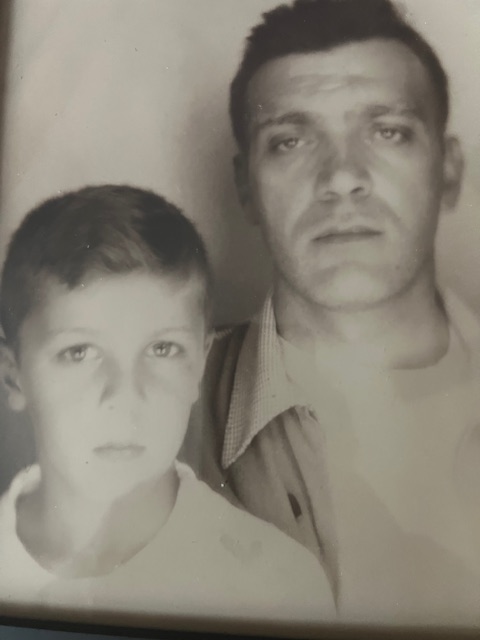
“When I was a boy of fourteen, my father was so ignorant I could hardly stand to have the old man around. But when I got to be twenty-one, I was astounded at how much he had learned in seven years.” (Mark Twain)
“The quality of a child’s relationship with his or her father seems to be the most important influence in deciding how that person will react to the world.” (John Nicholson)
“His heritage to his children wasn’t words or possessions, but an unspoken treasure, the treasure of his example as a man and a father. More than anything I have, I’m trying to pass that on to my children.” (Will Rogers, Jr.)
“The words a father speaks to his children in the privacy of the home are not overheard at the time, but as in whispering galleries, they will be heard at the end and by posterity.” (Jean Paul Friedrich Richter)
“I believe that what we become depends on what our fathers teach us at odd moments, when they aren’t trying to teach us. We are formed by little scraps of wisdom.” (Umberto Eco, Foucault’s Pendulum)
“God’s gift to you is your children; your gift to Him is what you do with them.” (The Bible and other teachings)
“Oh, my Pa-pa, to me he was so wonderful
Oh, my Pa-pa, to me he was so good.
No one could be so gentle and so lovable
Oh, my Pa-pa, he always understood.
Oh, my Pa-pa, to me he was so wonderful
Deep in my heart I miss him so today…” (Song by Eddie Fisher, 1954, Songwriters: Parson, Turner, Burkhard)
My father was born in Pozzuoli, near Naples, in 1915. He came to this country when he was 9 or 10. Pop was not an educated man; he only went to the 6th grade. He didn’t particularly love school, where he was often teased by the other kids for being a foreigner. And, he could get himself into a bit of trouble. For instance, one day, unbeknownst to the teacher, he snuck into the cloak room and began ringing the school bell, which was located there. Once the other students heard the bell, the entire school emptied out! So perhaps he wasn’t educated, but I always felt that he was street smart.
And, he had a big heart. He loved his family and would literally do anything for them. It was kind of a joke among my sisters and me, that if you either wanted something, or wanted something done, you couldn’t in good conscience let Pop know because he would immediately go out and do it for you. We honestly tried not to take advantage of this wonderful trait of his. As the author Leo Buscaglia wrote in his 1989 book, Papa, My Father, his parents “never taught me about love, they showed me.” When I think back to my childhood years, I realize that my parents, like Buscaglia’s, were “models for an understanding of the day-to-day dynamics of love.”
Listen, I think I had a great childhood. It was simple, without a lot of frills, but I feel it gave me a good start in life, a strong foundation. And, I remember being a happy kid. Arthur C. Brooks, a columnist for The Atlantic, has written that when it comes to children’s happiness that is not already genetically determined,
“specifically, one factor— parental warmth and affection, with slightly more weight to that of the fathers — has been shown to make up about a third of ‘psychological adjustment’ differences in their children, a holistic measure that includes markers of happiness,” (Brooks, pgs 6-7)
In Buscaglia’s book, he discusses how fathering had changed from his father’s time to his. I was involved in the raising of my three sons in the same era as Leo; he described it this way:
“The last three decades have produced a very altered image of fathers. Their traditional role has changed drastically. It is not uncommon today to find father as nurturer, willing to put urgent matters aside for what he agrees is more important — an active role as family member. He doesn’t feel uncomfortable accompanying his children to nursery school, going on class field trips, or proudly watching them perform in the school play, ballet, or baseball game, eagerly recording every action for posterity with his camera. …He is eager to involve himself in honest exchanges of feelings and affection, hoping that he will one day graduate into being one of his child’s best friends.”(Buscaglia, pgs. 20-21)
While my father’s style of parenting may have differed somewhat from the way I raised my sons, what I think he handed down to me was this: To always let your kids know that you’re there for them, that they can count on you, and that you want them to do even better than you did.
I remember as a young boy (maybe 6 or 7) that people would ask me: “Frankie, what are you going to be when you grow up?” I would reply: “A barber, like my father.” And he would say: “No, you’re going to college.” I’m not sure how he knew the importance of that in the early 1950s, but somehow he did. As I mentioned earlier, though not a person with a lot of formal education, I think Pop had natural smarts and an understanding of people and how to connect with them on a very human level. In his barber shop, he enjoyed engaging his customers in conversation, and he would tell me that whether it was a lawyer or a landscaper, he felt he had the ability to communicate with them. And, he had insight into people. Here’s something that he told me when I was just a kid, and I’ve repeated for years: “Just remember, you’re not better than anybody, but nobody’s better than you.”
One day after school, I walked up the hill from Lucy D. Anthony School to my dad’s barber shop to get a haircut. After I was finished and about to leave, a good friend of my father’s, Frank Montagna, said he would give me a ride home. As we walked out the door of the shop, Frank turned to me and said: “Frankie, your father is a good man; you turn out like him, you’ll be okay.” That remark impressed me, even as an eleven-year old, and I’ve never forgotten it.
As my three sons were going through their teenage years, we lived in a suburban community, where it was quite often necessary to drive your kids to the various activities they were involved in. I think they all appreciated my efforts on their behalf. But, one day, as I was driving him to a friend’s house, my oldest son, Michael, asked why I did all the things that I did for him and his brothers — even suggesting I needed to take more time for myself and work on writing that novel that I always talked about. (Well, I never did get around to writing the great American novel, or any other kind of novel for that matter, but I appreciated my kid’s understanding of what I then considered to be a higher priority in my life.) My answer to Michael was that I was trying to do for them what my own father had done for me. And, if they became parents some day, I hoped they would do the same for their children. I am very proud of who my boys have become, and I am heartened to see the unselfishness passed down from my father to my sons.
My dad has been gone over 20 years now. I still vividly remember his unselfishness and willingness to always put his kids first. I still quote some of his favorite phrases (e.g., when sharing a drink with someone, “First one today!”) And, I’m pretty sure that I have taken on some of his reactions and mannerisms; at times I feel, in my advanced age, that in some respects I have become my father. And, that gives me a good feeling, a warm feeling.
I always had great respect for him as I was growing up. But, I can honestly say, that having become a dad to three children myself, I have an even greater respect and admiration for what he did as a father. Certainly, Pop didn’t read books about child rearing, so I assume it came to him naturally. It’s not as if he never made any mistakes, but from my vantage point, he got most of it right. And, if he erred, he usually did so on the side of love. As one author has put it: “Raising children and shaping the intellect and character of another human being is one of the most delicate and serious undertakings of all.” (Berg). Like most of us parents, your “philosophy” of bringing up kids is probably done on the fly, learning as you go, hoping to get it right — rather than having a set system or well-designed template beforehand on how you will parent. I guess, for most of us, what we eventually do as we are raising our children becomes our default philosophy.
In the introductory quotes to this essay, I cited Umberto Eco’s insight that what helps us become who we are is a result of our fathers “teaching us at odd moments,” with ”little scraps of wisdom, “ “when they aren’t trying to teach us.” In other words, we may be teaching our kids about things when we aren’t even aware of it. They hear, and take in, more than we can even know. It reminds me of the little girl, Violet, in Michael Cunningham’s Day, who ”must have overheard something. Try keeping secrets from children, whose very lives depend on listening and knowing.” I’ll refer to this advice from Arthur Brooks:“Be the person you want your kids to become. The data don’t lie, but as parents, we do. Kids — who are walking BS-detectors — always notice when we say one thing and do another.”(Brooks)It’s often been said that you can’t fool small children or dogs. They’re not taken in by superficialities or a preexisting bias. Yes, kids seem to be able to more readily tell when a person — even their parent —is trustworthy. Be forewarned.
As I mentioned earlier, my dad, Michael John Fasano, left us over 20 years ago. At the time of his death, it had already been apparent to me that he had become my best friend. And, after he was gone — like a lot of adult children who lose a parent — there were many times I either picked up the phone to call him, or actually started dialing — only to realize, sadly, that he would not be at the other end to answer.
I remember reading something in the New York Times about a decade ago. It concerned a guy whose friend had just lost his dad, and while commiserating in an email he wrote: “However much you’re ready for it, nothing prepares you for the void fathers leave behind.” With a similar sentiment, when my friend Terry lost his dad in the early 2000s, I wrote to him:
“Even though we are older and on our own, and they don’t seem to play such a big part in our lives as when we were young, now that they are gone, there is a big space in our lives that they once filled — and for a while there will be a hole there.”
In the novel, Prophet Song, by Paul Lynch, a mother explains to her young daughter Molly that though the girl’s father is missing and presumed dead, he will continue to be an important part of her life. It’s because the love her father had given her as a small child will forever be stored in her heart:
“Your father is with you all the time, even while he’s gone, that is the meaning of the dream, you father came home to remind you that he is always here with you because your father is always alive in your heart, he is here with you now with his arm around you, and he will always be here because the love we are given when we are loved as a child is stored forever inside us, and your father has loved you so very much, his love for you cannot be taken away nor erased, please don’t ask me to explain this, you just need to believe it is true because it is so, it is a law of the human heart.” (Paul Lynch, Prophet Song, page 198)
When my own father passed away, I, of course, received many notes of condolence. This message from my friend Merrilee is one I have saved over the years because I think it relates directly back to the legacy that Pop left me and my sons:
“Dear Frank, Cathy, Michael, Josh and Luke —
We’re so sorry for the loss of your beloved father and grandfather. Please know in your faith that he is in a better place, and that each of you will forever carry him within you because you all share his firm foundation. He gave you the base upon which to build your lives. This no one can take away.God bless you all.
Love, Carmine, Merrilee and Nissa”
I’ve talked a lot about my dad in these paragraphs. Now, I’d like to end with some words that Leo Buscaglia used to summarize what his father meant to him. I think that this description aptly describes my own father, as well:
“I know for certain that he was very much a selfless person, never dishonest or vindictive. …He was compassionate, had good sense, and was always concerned about the welfare of others. …His attitude toward fatherhood made a positive and lasting difference in my life. What else can we ask of another human being?
Thanks, Papa, I’ll always love you”
Click below to listen to an audio recording of this essay
 Resonance
Beautiful Frank. I remember your dad, my Uncle Mike fondly. He gave PJ his first haircut. He made homemade ice cream whenever we came to visit. And his singing! I remember that too. All great memories of a wonderful man.
Debbie ❤️
LikeLike
Thanks, Debbie, he was my hero…💕
LikeLike
Hi there. I stumbled across your blog as I was looking for a name for my own, and decided to click your most recent post.
I lost my dad 4 years ago (5 years on January 6th) and I think about him every day. I always used to make sure the last thing I say to my parents before bed was “I love you” because I had some weird anxiety I’d lose someone in their sleep and wanted my last words to be important. 20-year old me must have knew something.
Long story, but the last night I saw my dad alive I didn’t say I love you, and the next day he had a heart attack and I never got to talk to him again.
This blog post brought me some comfort knowing still, other people go through this and yet the memory of their loved ones lives on.
I think at this point, I love to focus more on the happy moments and everything he did for me instead of the less glamorous (and even scary) moments I had with a stern father.
I appreciated the quotes throughout your post. Sometimes reading about other’s struggles makes me feel less alone even though I don’t even know your name. Sending peaceful energy your way.
LikeLike
Shelby, thanks for your comments and your honesty. As I expressed in my essay, I think there is something permanent about the love of our parents, our fathers. Something certainly spiritual, almost mystical. If you were loved as a child, even though your father may have been a stern dad, that love is still there, imho. Please let me know the name of your blog, I’d like to follow you.
Frank Fasano, resonance.blog
LikeLike